
By David Burke
- Taoiseach Jack Lynch and British Ambassador John Peck alarmed at prospect of Captain Kelly’s book
After Captain James Kelly was acquitted by the jury at the infamous Arms Trial in October 1970, he began to write a book about what had happened to him. His efforts were closely monitored by the British Embassy. The embassy was led by John Peck, a dirtytricks expert who had earlier commanded the notorious Information Research Department (IRD). The IRD was complicit in the massacre of hundreds of thousands of people due to the black propaganda it pumped out. Peck was involved in the coup against the democratically elected and secular – and popular – leader of Iran in the late 1940s, the event that precipitated so much turmoil in the Middle East. The IRD’s most reprehensible crime was the malign encouragement it gave to the anti-communist forces in Indonesia who slaughtered hundreds of thousands of people as a result.
In January 1971, Peck alerted Kelvin White, a senior diplomat at the West European Department of the Foreign and Commonwealth Office (FCO), about Captain Kelly’s book: “When I saw the Taoiseach [Jack Lynch] just before Christmas [1970] he mentioned casually that Captain James Kelly was trying to produce in double quick time a book about the arms trial which, he claimed, was going to be full of damaging material about the involvement of the whole Irish government”. Why Lynch passed-on this information is a mystery.
2. Dirty Tricks to halt the Publication of Captain Kelly’s Book
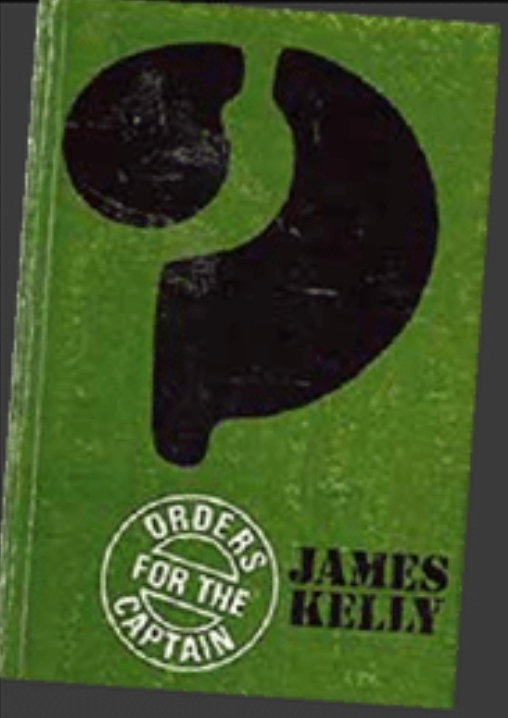
Captain Kelly managed to secure a contract with the British publisher Collins who described his book as the “most explosive book for some time”, in the London media. The title of the forthcoming book was ‘Orders for The Captain’.
Peck was determined to halt the book. He provided the FCO with some thoughts about how London might exert pressure on Collins to drop it, such as that it might be libellous. The FCO was soon advising Peck they had a contact in Collins. AC Thorpe of the FCO met a disloyal employee who undertook to steal a proof of the book. When the FCO read the stolen manuscript, they found something in it that confirmed their worst fears: something so alarming they intervened and successfully persuaded Collins to abandon the publication. Thorpe was well pleased with the result and commented that the author’s search for a publisher would now “have to start again from scratch”.
Michael Gill, managing director of Gill and Macmillan, stepped into the breach with an offer to publish it. Plates were made up and sent to a firm called Cahills for printing. On this occasion, George Colley, a minister in Lynch’s cabinet, swooped. As Captain Kelly put it, Cahills had some “valuable government printing contracts and this was the soft underbelly that gave the Irish government its chance, with word coming down from George Colley’s Ministry of Finance to halt printing or else! As far as both governments were concerned, ‘Orders for The Captain’ was not going to see the light of day and they nearly succeeded”.
Undaunted, Captain Kelly decided to selfpublish the book and approached a number of printers but, “the word had got out” and they were “not prepared to print in the face of official opprobrium”.

Help materialised out of the shadows: the Captain next received a phone call from a man who refused to identify himself but “requested that I meet him in an office in Jervis Street in Dublin’s city centre. He indicated that he might be in a position to help solve my printing problem. In Jervis Street, I climbed one or two flights of stairs in the designated building and found myself in a dark, dingy office. An apparently sturdy figure of average height sat hunched behind a small bare desk. He gestured towards the chair. Reiterating that he did not want to be identified, he requested that I should forget the meeting once it was over. To this day, I have not met the man again nor do I know who he was, but somehow or other I got the impression that he was a lawyer”.
The mysterious figure told him that there was a “small printing machine, operating on the phonographic system around the corner in Abbey Street, which I could rent. We discussed the ‘ins and outs’ of the matter and it was agreed that I should print 2,000 copies of the book initially, sell them and then pay the rent of the machine and the wages of the operator; and carry on from there. We shook hands on the deal and I went straight to the printing shop, where I introduced myself to the young machine operator and explained what I intended doing. Obviously, he had been briefed to expect me and I arranged to bring in the plates the following week. Without hesitation or payment, Michael Gill instructed Cahills to release the plates to me, while the printing firm, despite the official diktat not to print, agreed to collate and bind the book. On the due date, I arrived in Abbey Street; the machine was set up, and we were ready to go”.
The first 2,000 prints sold out in days, but Captain Kelly found himself short of copies when the “clamour for them was at its highest”. Nevertheless, he spent a year producing and distributing the book, “considerably relieving the impecunious position I and my family found ourselves in after the trauma of the trials”.
3. What was in the book that so alarmed the British?
One of the more unpleasant myths to emerge from the vines of dishonesty which have wrapped themselves around the Arms Crisis was a tendril which tried to manufacture a link between Captain Kelly and Saor Éire, the paramilitary group which murdered Garda Richard Fallon on the Quays in Dublin in April 1970. Captain Kelly was arrested in May 1970 by the Head of Garda Special Branch, John Fleming, and an Inspector Doocey. The pair interviewed Captain Kelly at the Bridewell. As the Captain recounted in ‘Orders for the Captain’, the first question put to him by Doocey was: “What do you know about the Garda Fallon murder?”. When Captain Kelly responded with purpleveined outrage, the question was withdrawn.
The reason for the question was a false and malicious rumour that the Captain and his associates had helped Saor Éire to procure the gun used to shoot Garda Fallon. While there was no evidence for this, the allegation clearly poisoned the attitude of the Garda against Captain Kelly and his associates. Neil Blaney, one of the Cabinet ministers dismissed by Taoiseach Jack Lynch during the Arms Crisis, was so incensed about rumours linking him to the group, he not only denied them but referred to the organisation in the Dáil during the Arms Crisis debate as “that lousy outfit Saor Éire”.
4. Where did the murder weapon come from?
So, where did the murder weapon come from? According to Seán Boyne, author of the brilliant book, Gunrunners, Saor Éire had been amassing weapons in the late 1960s. One of its members revealed to him that they had established a contact who worked at the British Small Arms factory in Birmingham. It ‘proved’ 9mm Star pistols for the Star munitions factory in Spain. The contact was able to set aside perfectly good pistols as ‘rejects’ and later smuggle them out of the factory. They were then sent to Ireland, passing surreptitiously through Dublin Airport.

Another source of guns for Saor Éire had been a high-profile Dublin underworld figure.
Boyne discovered that the Gardaí had come to believe that one of the Birmingham guns had been used to murder Garda Fallon in Dublin on 3 April 1970.
5. British Intelligence spies on Saor Éire but lets them smuggle guns to Ireland
British Intelligence could have halted the importation of the murder weapon but chose not to. The British agent who knew all about the Saor Éire gun-running efforts was the mysterious Captain Peter Markham Randall. Captain Kelly had saved his life in Dublin in November 1969 when he had tried to gain access to what he believed were IRA gun-training camps by offering arms to Northern Nationalists including John Kelly, a later codefendant at the Arms Trials.
Captain Kelly described the British spy in ‘Orders for the Captain’ as a “small, darkhaired, goatee-bearded man”. This description bears a striking resemblance to the arms dealer that Boyne described as having helped Saor Éire. He was also a “small man with a goatee beard” and was called ‘Randall’. According to Boyne’s source, Randall had made contact with a person linked to Saor Éire in the UK in the late 1960s.

“‘arms dealer’ gave his name as Randall, although other versions of the name were also reported. The Saor Éire-linked individual in the UK, in good faith, passed on this contact to his friends in the organisation back in Ireland, who were equally unsuspecting. In retrospect, the possibility opens up that British intelligence somehow detected Saor Éire activities in the UK and decided to infiltrate the subversive group by using an agent or a ‘front’ man, the mysterious Mr. Randall”.
Suffice it to say, if British Intelligence had moved to cut off the supply of weapons from Birmingham instead of exploiting it to preserve Markham Randall’s cover and develop other leads, it is possible Garda Fallon might not have been killed, or at least not by a weapon from Birmingham.
Bearing all the foregoing in mind, a passage in the Captain’s book can only have alarmed Peck and his masters in London to wit:
“The quest for arms by Northern representatives continued, and in November a suspected British agent was lured to Dublin. After three or four days’ negotiation in the Gresham Hotel, the supposed arms salesman offered a bribe to one of the Northerners. Negotiations were immediately broken off and an agent, who was using the name of Peter Markham Randall, presumably returned to England. I reported the affair to Colonel Hefferon and he initiated enquiries with Garda Headquarters”.
6. Spying on Charlie Haughey’s Brother in Portugal
Another person the British went to considerable lengths to monitor was Jock Haughey who knew about Markham-Randall from his participation in the attempt to purchase arms from him in November 1969. In October 1970 he went on a holiday to Portugal with his wife Kitty. One leg of the journey took the couple through Britain where they noticed they had picked up a tail, a British gentleman who shadowed their every move. In the mornings he would sit at the table next to them while they ate breakfast and then monitor them during the day. At night he would sit next to them again. While the Haugheys had been disturbed by him at the start of their holiday, they soon found his pedantic and predictable behaviour amusing, especially his habit of ordering lobster – and no other meal on the menu – for his evening meal. On at least one occasion they attempted to engage him in conversation much to his embarrassment and without success. On their return to Britain, he skipped the passport control queue and went directly to talk to the officials while the other passengers were queuing up.

The most plausible reason for trying to sabotage ‘Orders for the Captain’ and for the shadowing of Jock Haughey across Europe was because they were members of a tiny group of people who knew about Markham-Randall and could provide clues linking
him to the murder weapon Saor Éire might have used to kill Garda Fallon; further, that British Intelligence had not shared the information Markham Randall had gathered about Saor Éire in the late 1960s to help shut it down. Fallon was not murdered until April of 1970. Had this volatile connection been made, the incandescence among the rank-and-file gardaí, not to mention at middle and senior level, had the potential to set garda relations with MI5 and MI6 at nought, with little prospect of any reconciliation for years.
The roots of the British operation to suppress this information undoubtedly reached far deeper than anything described here. For a start, MI6 had clearly learned of the Haugheys’ holiday plans in advance and had been able to book an agent into the same hotel they proposed to visit.
To achieve this, they must have had access to the family’s phone conversations. In 1970 phone tapping was carried out by making a physical connection to a phone line, something that could only be done in the vicinity of a junction near the target’s phone. It is unlikely that MI6 deployed a tapping unit to Dublin in 1970. Instead, the information was probably furnished to them by a senior figure with access to the transcripts generated by Special Branch tappers.
7. Smearing Jock Haughey
A retired Special Branch officer familiar with Saor Éire and the two informers who were recruited by the gardaí from inside it is adamant that Jock Haughey had “nothing whatsoever – absolutely nothing – to do with Saor Éire’. Yet Jock Haughey spent the rest of his life unfairly tarnished by questions about the murder of Garda Fallon. Garret FitzGerald continued to press the issue in the Dáil over the next decade.
The Garda did not forget their fallen colleague. In 2014 a fresh inquiry was conducted by a detective superintendent attached to the Serious Crime Review Team at the National Bureau of Criminal Investigation. He and his team would have been well advised to have made enquiries in London about the spy who masqueraded as Captain Peter MarkhamRandall and the files MI5 and MI6 undoubtedly have about him and the Saor Éire gun smuggling network he penetrated.