
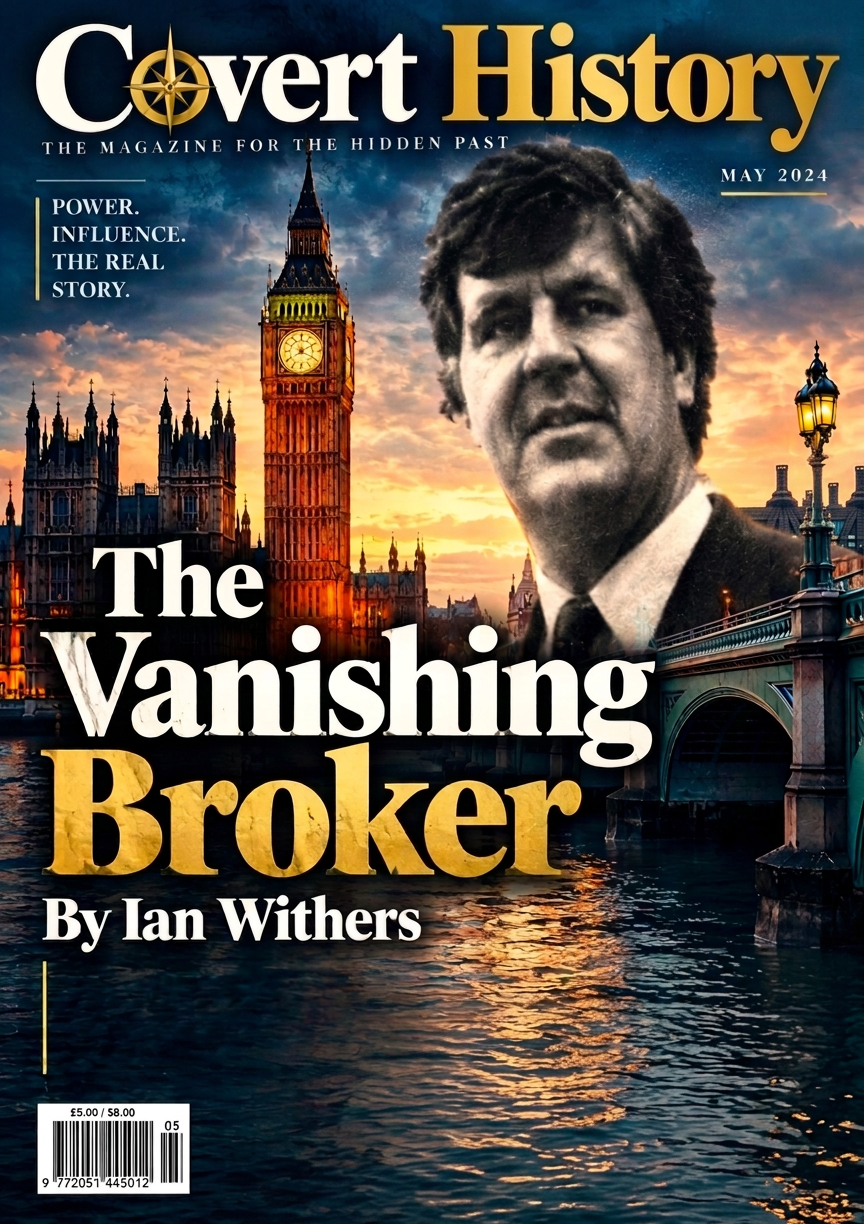
Dublin in 1996 was not exactly a hotbed of Russian activities, I had been on a few occasions to their Embassy to get visas to travel to Moscow, always rather dour staff, polite, efficient and never smiling, they carefully questioned the purpose of going to Russia, and if one had sufficient financial resources to cover anticipated costs! My Sponsor for the trips was a pleasant Muscovite called Alexander who with his wife Tatiana was living in Dublin growing a company in which they had invested lots of roubles!

Their Russian corporation had entered into an agreement to help finance the development of a Siberian oil field. To make it work, they had struck up a deal with an Irish limited public company, Bula Resources, and its Chief Executive Officer, Jim Stanley. But Bula and Mr Stanley were behaving oddly, not settling into the deal and raising problems that were impeding progress. Alexander Marichev had an inkling that all was not as it seemed.

I undertook exploration of my own, and with the help of intercepted phone calls, confirmed that Jim Stanley had created a secret competitive company on the British Virgin Islands. Through this, he had engineered a complex deal which involved Bula giving 100 million shares, worth £2M, to his own competitive company for a stake in the oil field. He was using the private intelligence he had obtained as a result of his insight into the Russian corporation throughout.
The entire debacle ended up in court in both London and Dublin and was subject to inquiry by the Irish Stock Exchange, during which my final report was requested. In fact, the final report produced by the Irish Stock Exchange was, give or take the odd word or two, a mirror image of my report. I suppose I should have been flattered.

No such financial modesty was at play in terms of what Top Dog Insurance Broker Tony Taylor had been up to in the mid-90’s
Tony Taylor was a well-known figure in insurance circles, and he was also chair of the Insurance Brokers Association. He was as clean as a whistle in the eyes of the nation, given that he had drawn up the code of ethics governing his trade. That same code had largely been enshrined in Irish law.

In August 1996, he and his wife Shirley vanished from their high-end Dublin home, leaving behind little more than their pet dog. Early theories among a shocked public were that they might have been kidnapped. Then it emerged that Taylor’s investment business, Taylor Asset Management Group, had been falling apart. In fact, it had collapsed altogether in 1996, and Taylor had ensured that a batch of documents were destroyed before he legged it. And at the time he left, accompanied by his wife, about £1.7M of investors’ funds was missing.
Time passed, the Gardai kept investigating, and the press reported on the case many times. Yet what had become of Taylor and his wife remained a mystery. His Mercedes Benz had been spotted parked in the Dublin port area, the assumption being that he had caught a ferry to England, but that was about it.

My involvement began with a call to my Dame Street office from an accountant by the name of Eddie Hobbs. He was a well-known figure in Ireland, a popular broadcaster on financial matters. I had often appeared with him on panel shows, discussing issues around locating debtors. He asked me to meet him at his office in Naas, County Kildare, about twenty miles from the city. There, he introduced me to half a dozen men. All had invested their savings with Tony Taylor’s company, a combined total of about £1M. Among them were individuals who had been hiding undeclared savings, and as a result, did not want to file complaints with the police. They were unlikely to ever get their money back, but they wanted Tony Taylor to face justice.
Eddie retained me on behalf of his clients. We agreed, in those pre-Euro days, that I would take a flat fee in Irish punts. A separate fee would follow, but only if I located Taylor.

Office staff assisted as we used all the available resources. I prepared a clipboard questionnaire for agents before sending them to knock on neighbours’ doors. We spent a lot of time in the area, making sure we were not missing anything. We even did a dumpster dive, emptied the bins at his abandoned house, and sifted through the horrible rubbish to check for anything of interest. It was there that we found old phone bills. Lots of calls had been made before the Taylors disappeared. Back in the office, we spent hours calling each number, asking questions to see how much information was forthcoming.
We went on to collect details of his extended family all over Ireland, Britain, and various parts of the world via official records. We put in calls where it was appropriate and engaged a number of agencies to knock on doors and ask discreet questions.
We tracked his son, Paul, to an address in London, and instead of making our presence known, we began round-the-clock surveillance. Paul was working with an insurance broker in the city. We were sure that at some point, he would engage with his missing parents. And then one day, the surveillance team noted that he was packing up the contents of his home, which gave every indication he was moving out.

I arranged for a very smart female operative to call at the property. She pretexted that she was a neighbour, chatted easily with him, and found out he had landed a job in Washington DC. My immediate thought was that maybe that’s where Taylor senior might be. I called my office in Maryland, which was only an hour from downtown DC. Very quickly, they came up with a name and date of birth match for an Anthony Taylor living in North Carolina, four or five hours away.
A few days later, I had an agent staking out the address, but he did not see anyone who came close to matching the description of my missing Irishman. I sent him over to the house and asked him to pose as a journalist. And indeed, Tony Taylor was there. He answered the door. But this Tony Taylor was black. So it was back to the drawing board.

I kept my focus on Paul and established an address for him in Georgetown DC. Database records listed his newly-created social security number, which in turn enabled us to establish where he was working and his landline number. A local researcher secured copies of his phone bills and sent them to me in Dublin. But, once again, there was nothing of interest.
Months passed. Christmas 1999 was coming, and Tony Taylor had been offside for some two years. I needed a break in the case. Then came a call from a journalist at a Dublin Sunday newspaper. They were working on a centre-page spread that listed Ireland’s most wanted persons, and knowing I had been searching for Taylor, they asked if I had any news. I sensed an opportunity. I helped the reporter out, gave them as much information as I could, and asked if they would highlight his case within the story. I said I felt the publicity could move it forward. My plan was, after publication, to courier a copy to our Maryland office. They would immediately take it to the son’s address in DC with a message reading, Sorry to hear your father got arrested.

A few days later, the newspaper carried the goods under the headline: Ireland’s Most Wanted. I sent it by FedEx to my partner agent, Terry. He wrote the anonymous note, pinned it to the newspaper, and delivered the package as if it had all just arrived from Ireland. Surveillance watched as junior picked up the package and took it inside.
My idea had been to keep tabs on the phone calls that immediately followed. But, frustratingly, we had to wait a month for the latest bill. When the time came, a researcher secured a copy from the phone company and faxed it over. On the very date the paper was delivered, there were four separate calls to a UK number. The area code was for Eastbourne in East Sussex, about twenty miles from my office in Brighton. The excitement among our staff was building. I called my Brighton office manager, Brian Lewis. He established that the number was an unlisted landline in the name of a Mr T Taylor at an address in Eastbourne town. It seemed our man had not changed his name. Yet we had to be absolutely certain it was him. I was the one with the English accent, so I took a chance, cobbled a pretext together and dialled. After a couple of rings, it went to an answering machine.
You have reached the Taylor household. There’s no one around so please leave a message.’
An Irish accent. I called Eddie Hobbs right away and asked him to dial the same number and listen. Ten minutes later, he got back to me.
‘Congratulations, you’ve found him. I’d recognise that voice anywhere.’
So the last leg of a long journey began. Brian Lewis and his team launched into surveillance the next morning. Within a few hours, they had sightings of a man matching Taylor’s description coming and going. Eddie requested a round-the-clock watch as Irish police went about arranging for an extradition warrant with the help of their counterparts in Eastbourne.

Three days later, my two-strong surveillance team, parked in a van, received a knock on the back door. A man in a commercial vehicle had pulled up. The visitor showed them his Sussex Police warrant card. He wanted to know what my agents were up to. They said to call me. My phone duly rang, and a detective sergeant told of his curiosity about the men in the van. I explained and said his office would likely be hearing from Dublin Police when the court cleared an extradition warrant.
‘I’ll put my cards on the table. We’ve already received a request from the Garda asking that we set up police surveillance on this man pending the issue of a warrant. There’s no point in the two of us doing it and getting under each other’s feet,’ the policeman said.

It made perfect sense that he and his team take over. I arranged for pictures, videos, and other details to be handed over and my guys left. Among the items were some receipts for computers sourced from his bins, which were significant. Taylor had started up in business once again, investing other people’s money.
Within a few days, the fifty-four-year-old was arrested. The story made headlines in Britain and Ireland given that he went on to fight the extradition proceedings. It took a few months, but eventually he went back to Ireland for a date at the Dublin Circuit Criminal Court. He pleaded guilty to five charges involving fraud and the destruction of documents. It was reported that investors lost sums of between £30,000 and £100,000. A number had entrusted him with their life savings, but they had no hope of getting the money back. He was given five years in jail.

IRISH TIMES
Broker who absconded gets five years for fraud
The former prominent investment broker Tony Taylor has been jailed for five years for fraudulently converting over £360,000 and…
Tue Oct 02, 2001
The former prominent investment broker Tony Taylor has been jailed for five years for fraudulently converting over £360,000 and destroying records and documents relating to his businesses.
Taylor (54) pleaded guilty at Dublin Circuit Criminal Court to three counts of the fraudulent conversion of cheques between March 27th, 1990 and July 9th, 1996; and one charge of causing the destruction of records and documents relating to Taylor Asset Management, Clyde Road, Ballsbridge, on August 6th, 1996.
He also pleaded guilty to a charge of the fraudulent diversion of funds for his own use between April 9th, 1996 and May 15th, 1996.

Taylor, formerly from Anglesea Road, Dublin 4, was living in England at Wrestwood Avenue, Eastbourne, after absconding from Ireland following the collapse of the Taylor Group three years previously, when tracked down by private investigators in August 1999.
He was extradited by the Garda Bureau of Fraudulent Investigation in January 2000, an extradition he strongly contested. He has been in custody since. A nolle prosequi was entered on 10 further charges. It had been estimated a trial would have lasted some eight weeks.
Judge Elizabeth Dunne said she had no doubt that the amount of money involved was “very significant” and without knowing too much about the victims, she said they must have been seriously affected having no chance of ever being recompensed.
“The court takes a serious view of Mr Taylor’s actions and were it not for his guilty plea a very stringent custodial sentence would have been imposed if he was found guilty after a trial,” she said.
“I have no doubt that the victims in this case would have been strongly affected by the losses of such money and I have to mark the seriousness of the offences,” she concluded.
Defence Counsel, Mr Paul McDermott SC (with Mr Luan O Braonain BL) earlier told Judge Dunne that Taylor absconded because of an article published connecting him with a well-known Dublin criminal. It referred to a link with the Veronica Guerin murder in June 1996 and it caused him “an enormous fear”.
He added that he deeply regretted his actions and his invaluable plea saved a lot of court time. A trial would have lasted in excess of eight weeks.
“My client worked very hard in this business, dating back to 1967, and these offences will lead to business and social isolation in the future,” he said.
“It has deeply affected him and he will live with this for the rest of his life. He never lived any high-flying lifestyle and the money defrauded was purely to save his business which was in serious danger of collapse,” Mr McDermott added. Detective Garda Kevin Monks told Mr Shane Murphy SC (with Mr George Birmingham SC) prosecuting, that at the time of the offences Taylor owned three companies, Taylor Investment Ltd, Taylor and Associates Financial Services and Taylor Asset Management which all made up the Taylor Group.
Det Gda Monks added that Taylor acted as an agent for personal clients who wished to invest money with businesses in Ireland or abroad.
In January 1991, a retired married woman, June Anne O’Reilly, gave him a cheque for £50,000 that she wanted lodged with a company called Fleming Fund Management.
Taylor told Ms O’Reilly that he would lodge the money with the Shanghai Bank in Hong Kong. After the Taylor Group collapsed in 1996 he said he was transferring the remaining £45,208 into an account in the Isle of Man.
Det Gda Monks said Ms O’Reilly has not received any of her money back.
Another investor, Mr Patrick Millen, gave Taylor a cheque for £220,358 on March 27, 1990, to be invested in a company called Fidelity.
Taylor lodged the money in various overseas accounts but when the Taylor Group came into financial difficulty he returned a cheque for £70,000 to Mr Millen. The rest of the money was lost.
Between 1988 and 1996 a third investor, Mr George O’Hara, made various investments with Taylor amounting to £205,000 under a guarantee that the funds would be secure.
Following his dealings with Taylor he ended up with a loss of approximately £136,000 from the money he invested. The money was lodged in various Taylor accounts.
Det Gda Monks said that in May 1991 the sum of £25,515, which rose to over £31,000, was given to Taylor by a Ms Joan Lynch to be invested with Fleming Fund Management but in June 1996 he asked for the money to be returned and lodged it with the Royal Bank of Canada in Jersey.
Throughout the period the investors would often inquire as to how their funds were doing and would be told they were doing good but these interactions were only with Taylor and over the telephone.
Det Gda Monks said on August 6th, 1996, he told a female staff member to delete various names from his computer and then to shred all documents going back to 1989.
The woman felt nervous about it but agreed when he explained an inspection was due. It took her until midnight and all the records were put into 15 black plastic bags. Three days later he met with an inspector but had absconded to England before a second meeting, on August 12th.
IRISH ECHO
Rogue investor Taylor gets 5-year sentence
February 16, 2011
By Andrew Bushe
DUBLIN — Rogue investment broker Tony Taylor, who was arrested in the British seaside resort of Eastbourne in 1999, has been jailed for five years after pleading guilty to charges of defrauding four clients out of a total investment of just over _382,000.
The jailing of Taylor, who is 53, once a pillar of the Irish financial establishment and adviser to the government on legislation to police the investment advice sector, follows the biggest fraud investigation in the history of the state.
Ironically, he has become the first person to be jailed for destroying documents — a charge leveled under the Investment Intermediaries Act 1995, which he had advised the Government on.
Taylor fled the country in 1966 as his brokerage business was collapsing. It was later found about _1.7 million in clients’ funds were unaccounted for.
His lawyer told the Circuit Criminal Court that he suffered from a “blindness to reality” when he found his business was in difficulty. He began to use clients’ money to bail out his companies and keep them afloat.
Before he and his wife, Shirley, absconded, abandoning their house and pet dog Harvey, he ordered the shredding of bin sacks of records dating back to 1989.
His Ballsbridge-based Taylor Asset Management company had been one of the country’s largest individual investment brokers with 1,200 clients and about _30 million invested.
One of Taylor’s victims was the Society of St. Vincent de Paul, which lost _185,000 it had earmarked for a holiday center for underprivileged children.
As part of the deal for a guilty plea to avoid a trial that could have lasted 10 weeks and involved 60 witnesses, the charge relating to the charity’s money was dropped.
After his disappearance, it was discovered that he kept a separate set of books for special customers at home.
It is believed a number of his clients may not have made a complaint because they had entrusted him with “hot” money or untaxed earnings.
When Taylor was tracked down to Eastbourne living under the name Andrew Taylor, British police began surveillance and found a private investigation agency was also keeping him under observation.
Taylor was served with 15 extradition warrants involving _620,000 and was returned to Ireland in January 2000.
IRISH INDEPENDENT
Broker pleads guilty to conning investors
Martha Kearns
Wed 3 Oct 2001
DISGRACED investment broker Tony Taylor has been jailed for five years after he pleaded guilty to conning four small investors out of more than £360,000.
But 17 investors who are believed to have lost a combined £1.8m are unlikely to ever to get a penny from the liquidation of Mr Taylor’s firm.

Taylor (54) admitted at Dublin Circuit Criminal Court yesterday to five separate charges of fraudulently converting £363,312 and destroying documents relating to his businesses. The 11th hour guilty plea saved an eight to 10 week trial.
Formerly from Anglesea Road, Dublin 4, Taylor fled the country in 1996 after the collapse of the Taylor Group, which included Taylor Investment Ltd, Taylor and Associates Financial Services and Taylor Asset Management.
He was tracked down to the seaside village of Eastbourne in England in August 1999 and extradited. He has remained in custody ever since and his sentence will be backdated.
Through his defence counsel Paul McDermott SC, Mr Taylor told the court said he was sorry and deeply regretted what had happened to his “unfortunate victims”.
However, Mr McDermott went on to say that Mr Taylor was in no position to repay any of the money, a view which was confirmed in court by Det Garda Kevin Monks.

Taylor Asset Management liquidator Paddy McSwiney is still pursuing legal action against Mr Taylor and his wife Shirley to recoup about £300,000 left from the proceeds of the sale of Mr Taylor’s luxury Dublin home to former Miss Ireland Michelle Rocca five years ago.
All of the charges Taylor pleaded guilty to yesterday involved his own personal clients including June Anne O’Reilly, who in January 1991 asked him to invest money with Fleming Fund Management in Luxembourg. Taylor told Ms O’Reilly he was transfering the money to the Shanghai Bank in Hong Kong. Instead Taylor lodged her cheque for £45,208.14 into an account in the Isle of Man. She has never received any of her money.
Patrick Milne who gave Taylor £220,858.15 on March 27, 1990 to be invested in a company called Fidelity. Instead, Taylor lodged the money in various overseas accounts. Fidelity repaid £70,000 but he lost the rest.
He also pleaded guilty to one charge of causing the destruction of records and documents relating to his firm Taylor Asset Management on August 6, 1996.
In giving her judgment, Judge Elizabeth Dunne said she had no doubt that the amount of money involved was “very significant” and without knowing too much about the victims, she said they must have been seriously affected having no chance of ever being recompensed. “The court takes a serious view of Mr Taylor’s actions and were it not for his guilty plea a very stringent custodial sentence would have been imposed if he was found guilty after a trial. I have no doubt that the victims in this case would have been strongly affected by the losses.”
Getting thumped for £500 a day
https://www.independent.ie › business › getting-thumpe…
Ian Withers, private eye, tells Nick Webb how locating broker Tony Taylor was easy, compared to fending off a coup by ‘Mad’ Mike Hoare’s mercenaries.
`Betrayed’ partner hired private eye to find Taylor | …
https://www.independent.ie › irish-news › betrayed-part…
13 Aug 1999 — Mr Withers was hired by Mr Hobbs and an investor who lost money when Taylor disappeared in 1996. The rogue broker, originally from Ballsbridge, …
“News Without Comment” -One of our own

World Association of Professional Investigators
22 Mar 2021 — Ian Withers. … And while based in Dublin in the Nineties he tracked down vanished investment broker Tony Taylor to an address in England.
