
“Speak up for those who cannot speak for themselves; ensure justice for those being crushed. Yes, speak up for the poor and helpless, and see that they get justice.” Proverbs 31:8-9 (NLV)
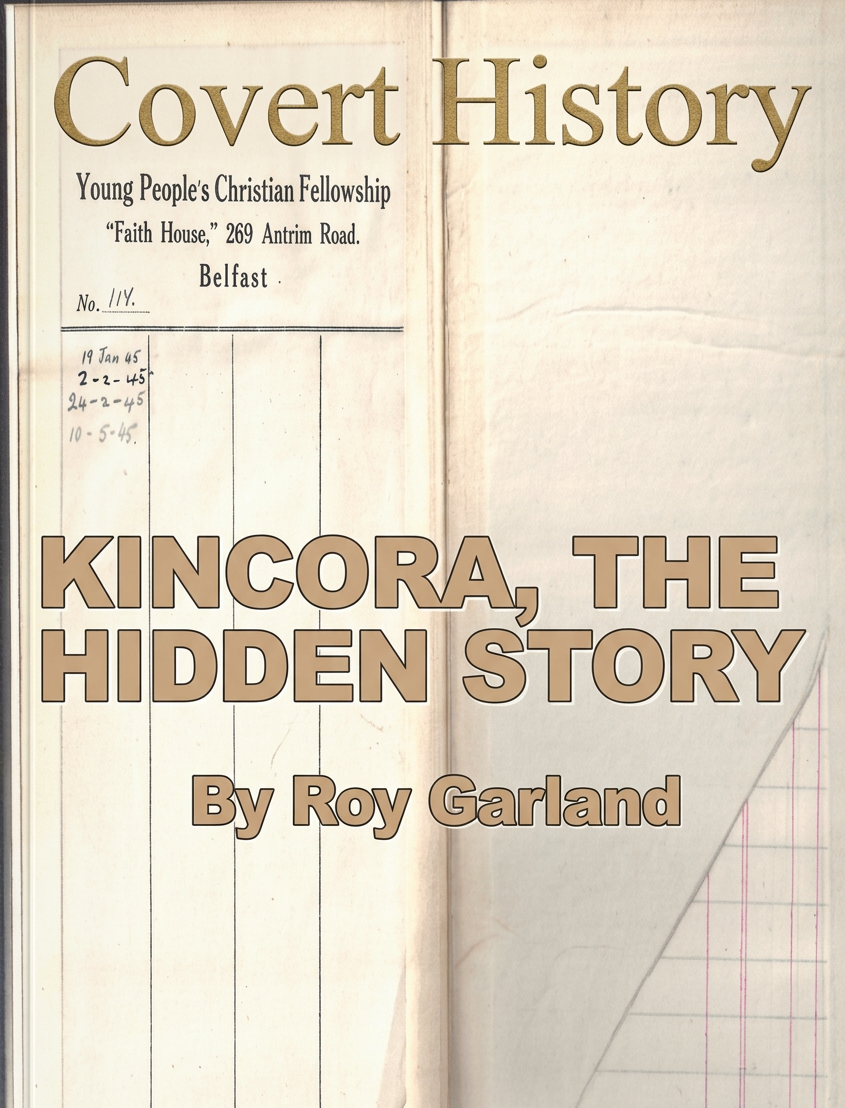
Judge Hughes said of his inquiry into Kincora Boys’ Home and other care homes, in the 1980s that, “The conduct of the police, or elected representatives, or clergymen, or military Intelligence” were “not under scrutiny in this Inquiry.” The decades of abuse at Faith House also remained outside the Terms of Reference (TOR) so could not be investigated yet scores, possibly a hundred or more boys, young men and women were abused there.

The Historical Institutional Abuse Inquiry (HIAI), chaired by Judge Anthony Hart, produced a report in 2017. It assumed I spoke of Kincora about which I knew nothing. I only spoke about Faith House, founded in 1941 long before Kincora came to light. The “mission,” there was named the Christian Fellowship Centre and Irish Emancipation Crusade (CFCIEC), which gave effective cover for the abuse. Much false and scandalous material and the exclusion of Faith House ensured I would take no part in the Inquiry.

The mission claimed to be “A national movement for the evangelization of Ireland and the deepening of spiritual life!”[1] But the real purpose seemed to be to provide a safe haven for abuse by the mission leader. William McGrath, one of the Kincora abusers, ran Faith House, first based on Belfast’s Antrim Road in the 1940s, Finaghy in the 1950s, Wellington Park in the 1960s and Greenwood Avenue in the 1970s. The word, “Centre” was dropped by the 1960s, which I suspect, was to avoid parents suing the property. Many victims left but few if any, explained why. McGrath felt betrayed and sought sympathy. The abuse, disguised as counselling, continued for decades, but the psychological grooming was at times as damaging as the brutality at Kincora.
The stated aim of the mission was to reverse the decline in Protestantism, which was said to be “dying out in Ireland.” Supporters were to make “An all-out effort to put the gospel into the hands of our fellow-countrymen, bound by the foreign and cruel system of Romanism.”[2] The self-styled secretary, in practice the leader, claimed to be taking the gospel to Irish Catholics to revive the faith of St Patrick. Former victims told me their abuse began in the 1940s. Two women claimed he tried to have sex with each but psychological concepts had been picked up from the Rev. Dr. William Northridge a psychologist who McGrath said, had mentored him.[3]

I first heard McGrath speak at a small church in Percy Street in December 1956, and was invited to Faith House, Finaghy. I thought this might be a step towards Christian service and was inspired by McGrath’s stories of C.T. Studd, who devoted his life and inheritance to missions in India, China and Africa.[4] Boys from less privileged backgrounds achieved great things for God. He told of five missionaries in Ecuador, martyred by those they served. I read their story, Through Gates of Splendor[5] and entered Bible College near Maidenhead in England in 1960. Dad was uneasy about the mission but didn’t know why, but expected me to develop his small business. Bible College proved a life changing experience and while there, I successfully engaged in university work after leaving school as a 14-year-old.

I was welcomed into the impressive mansion of Faith House, Finaghy by a young lady who led me into McGrath’s study. I sat reading inscriptions and glancing through books. A framed inscription on the large fireplace read, “Dare to do right, dare to be true, keep the great judgment seat always in view. Look at your work as you’ll look at it then, scanned by Jehovah and angels and men.”[6] I felt challenged but learned of a hidden aspect of the mission. As Vera Baird, former Victims’ Commissioner said, “doing charitable works…bears no relationship to whether that same man is a sexual abuser.”[7] The young lady later told me a shocking story.
She had run children’s meetings at the mission but learned that the “mission” leader was sexually abusing the children and also during visits to the Irish Republic to “spread the gospel.” She was shocked when confronted at the mission by two naked men. As an unpaid English volunteer she had no easy way out but eventually “escaped” but returned briefly to collect her things. I put her story to the mission leader who dismissed it saying she had mental problems and was not to be taken seriously. I had lived a sheltered life and could not believe such things possible at a “Christian mission.” The leader impressed me with his psychology and apparent dedication and seemed capable and wise in many respects.

Year’s later one man, who was abused at the “mission” in the 1940s, as a 14-year-old, said he was told by McGrath he was homosexual and had mental problems. He was distraught and never recovered despite psychiatric treatment. A nurse at a Day Centre said his problems were not caused by the abuse but the cunning, deceitful grooming and abuse did I believe, lead to great distress. I could almost feel his pain it was so palpable, but scores perhaps a hundred and more, were abused at the mission, which could not be investigated, as it was outside the Terms of Reference. I also talked with other men, who admitted being abused as teenagers in the 1940s.
I believe it was in the early 1990s that an RUC investigator DC Jim Cullen interviewed a young man who had worked with me, at Donegall Pass RUC. He spoke openly and courageously and insisted I stay while he spoke of years of abuse. I expected the corruption would come to an end but instead scapegoats were sought. The RUC’s DC Cullen heard the testimony but later denied this had taken place. Cullen faced determined opposition from fellow RUC who may have been Tara members held him captive at the Station but had not searched him so he produced his gun and they released him but continued to hinder his investigation.[8] I faced death threats after gunmen were asked by McGrath to assassinate me. One plot involved Davy Payne who admitted planning to kill me. I broke all contact with Faith House and groups the leader had influence in and began studies and entered Queen’s University in 1973 to complete a social science degree and teaching qualification.

McGrath rationalized his abuse, as psychologist Rev H.H. Aitchison [9] put it. But he claimed he was only encouraging friendships among boys. He referred to Biblical friendships between Jesus and John the beloved disciple and David and Jonathan. He said he was not saying these were homosexual but friendships that have been distorted by the modern emphasis on heterosexuality. He was a secret, insatiable abuser of boys and others he “treated” for personal “problems.” A political side began when after opposing the Orange Order for years he joined in the mid 1960s and encouraged others to infiltrate Orange Lodges and the UUP to stop the “decline” in Protestantism.

In 1962, Sir George Clark, Orange Order Grand Master, had initially accepted an invitation to talks from James Lennon of the Ancient Order of Hibernians (AOH). But McGrath dismissed such talks as anathema. He encouraged young people to infiltrate the Orange and UUP to prevent moderation. His opposition became virulent because Queen Elizabeth and other dignitaries would visit the Pope in Rome. This he said meant the British Throne, Parliament and Church had betrayed the faith but he focused primarily on Queen Elizabeth’s “betrayal” whose visit to the Pope was he claimed, the ultimate betrayal as it re-established communion with the See of Rome.

He claimed the Northern Ireland Civil Rights Association was part of a Communist plot to destabilize NI and create revolution across the UK. He formed Ireland’s Heritage Orange Lodge whose title appeared on the banner in Irish as Oidhreacht Eireann. He then insisted on adding a verse beneath a map of Ireland, “Again Boyne River shall flow blood red, the heath be dipped in gore, err crownless harp in rebel hands shall fly in Ulster’s shore.”[10] I could not accept this and the Grand Master agreed. McGrath accepted the verdict so the verse was excluded. A few years later leading Loyalists helped create possibilities for a new future, beyond Orange and Green in an evolving relationship between the Irish people based on mutual respect. Loyalists welcomed the banner and some engaged in dialogue with Republicans.
During the 1960s McGrath invited me to join the “London and Belfast Committee,” composed of people, apparently linked with Intelligence. He would not explain so I declined, leaving him devastated. He said that because of my refusal he and I were excluded from this and other committees. I owe my survival to wise advice from a Loyalist leader who told me to keep a low profile and that I might have to flee the country, as the threat would remain while the assassins lived. Yet the HIAI accused me of being both gay and a UVF member, both of which were untrue but could be used to “justify,” my killing. I admired the courage of Loyalist Leaders who spoke with both IRA wings during 1973/74. This I believe was the beginning of the end of our foolish and cruel conflict. I was not homophobic but neither was I homosexual, as the HIAI claimed, along with much other misinformation.

Lawyer Brian Garrett told me the Inquiries had privilege like a court so could not be challenged at law. Much other RUC material was to put it mildly inaccurate. Protestant clergy suggested I write my story, which is being prepared for publication. Two of the three abusers at Kincora pleaded guilty in 1981 but the “mission’ secretary denied his guilt but spoke with his Counsel, Desmond Boal QC and then pleaded guilty. Boal later encouraged me to continue with this work. The abuse at Faith House was never addressed and the full truth still remains to be told.
[1] From CFCIEC leaflet on Our Vision and Ministry (published in the 1950s.)
[2] Ibid .
[3] Northridge, NL, Psychology and Pastoral Practice (The Epworth Press 1938.)
[4] Studd, Charles Thomas, founder of the Worldwide Evangelization Crusade in 1913. He often known as CT Studd.
[5] Elliott, Elizabeth, Through Gates of Splendor. (First Edition 1957 Harper & Brothers.)
[6] This is a verse of a hymn by George L. Taylor (1835–1903)
[7] The Guardian, 29 April 2014.
[8] He told me this in January 1996.
[9] Aitchison, Henry Houston, Psychology Without Sighs (London 1937). Was in the Faith House Library since at least 1945.
[10] Authorship unknown.